




Refillable Skincare Packaging for Creams, Serums & Cleansers
Refillable skincare packaging cuts single-use waste by pairing a durable outer vessel with a compostable refill and a molded fiber tray that holds the refill secure — and it has become one of the fastest-growing sourcing requests from US skincare brands in 2026. The model is simple: the customer keeps the jar or bottle, and you ship a low-weight refill that snaps, pours, or drops into the original. Less plastic, lower freight, and a story customers actually want to share.
Last March, a DTC serum founder we'll call Danielle watched 4,200 empty amber dropper bottles pile up at her 3PL. Every one was single-use. Every one was heading to a landfill because most US curbside programs reject dark glass and mixed-material droppers. Her "clean beauty" line was quietly shipping more waste than product. That kind of wake-up call is exactly why refillable skincare packaging moved from a nice-to-have to a line item in her next procurement cycle.
You probably already feel the pressure Danielle felt. Retail buyers now ask for refill-ready formats. Customers screenshot your packaging and ask why it isn't recyclable. Your sustainability lead needs numbers for the next ESG report. In this guide, we'll walk through how a refillable skincare system actually works, which formats fit creams versus serums versus cleansers, where molded fiber trays earn their place, and what to ask a manufacturer before you commit. By the end, you'll have a practical blueprint — and a clear next step to request a quote for your own line.
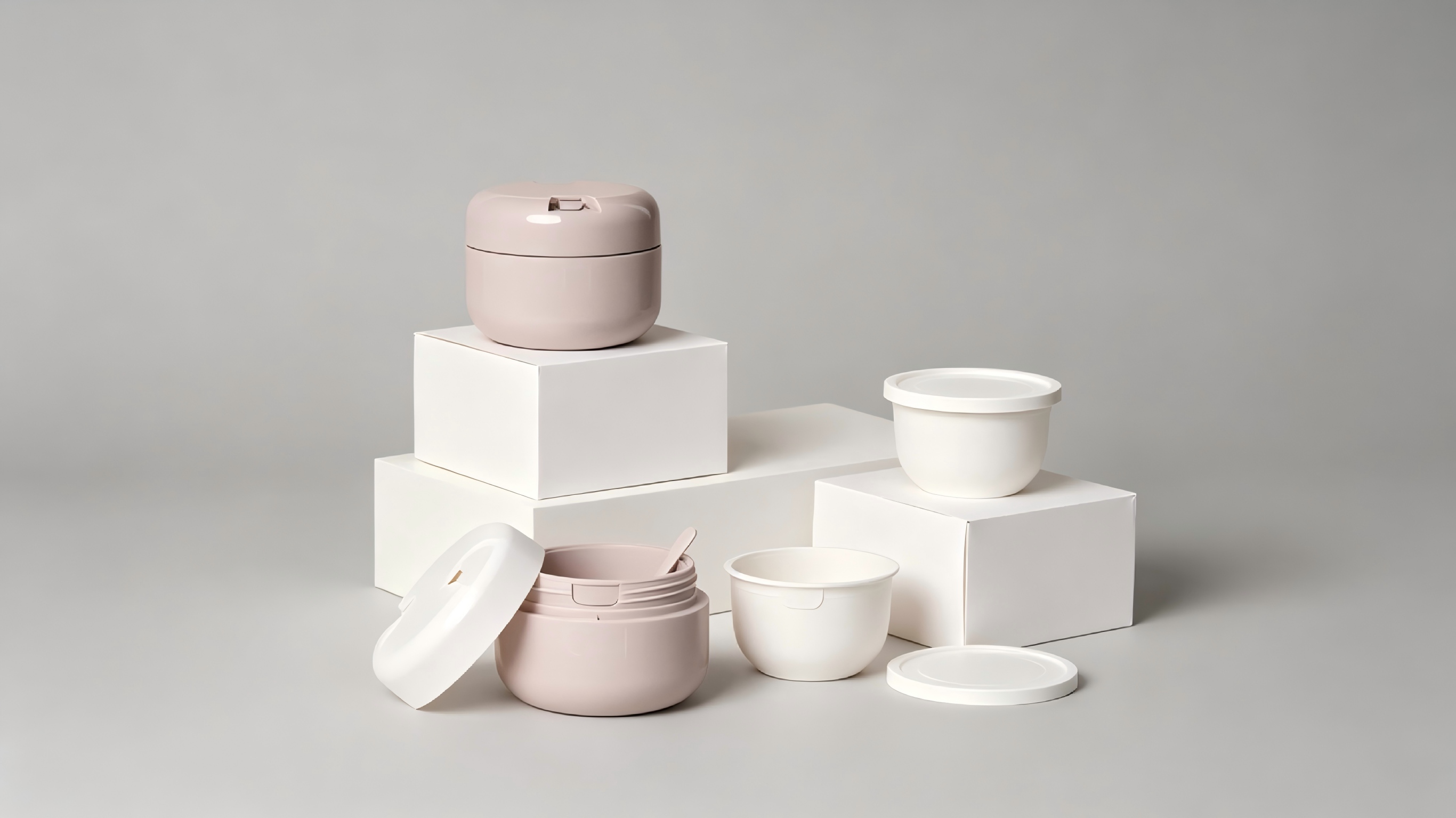
- A refillable skincare system keeps a durable outer vessel in the customer's hands and ships a lightweight compostable refill, cutting single-use plastic and outbound freight weight.
- Creams, serums, and cleansers each need a different refill architecture — wide-mouth jars, dropper-compatible refills, and stand-up or pouch formats respectively.
- A custom molded fiber tray for skincare products protects the refill in transit and replaces plastic insert trays with a single, compostable material.
- Esen builds these systems PFAS-free by design using FSC-sourced fiber, with OEM tooling and low MOQ for emerging brands.
- Start with one hero SKU, validate the refill ritual with a small batch, then expand the system across your range.
Why Skincare Brands Are Switching to Refill Systems
The shift toward refillable formats is not a trend driven by optics alone. It is a response to three forces converging at once: regulation, retail expectations, and unit economics.
Regulators in the EU have already set the direction with the Packaging and Packaging Waste Regulation (PPWR), which pushes reusable and refillable packaging into mainstream compliance thinking across member states. US brands selling internationally feel the ripple effects, because global suppliers standardize around the strictest applicable rule. Even brands that only ship domestically now design for reuse to stay competitive on shelves next to refill-ready competitors.
Retail is the second force. Major beauty retailers have launched refill stations and refill-friendly merchandising. A buyer who once accepted a glass jar now asks, "What's your refill plan?" That single question reframes your packaging from a cost center into a merchandising asset. For the color-cosmetics side of that same retail shift, our [makeup refill packaging]guide covers compacts, pans, and in-store refill trays built for those stations.
The third force is the one founders feel in their P&L. A refill ships lighter than a full bottle with cap, collar, and secondary carton. Over a year of DTC shipments, that weight difference compounds into real savings on dimensional weight and corrugate. Refillable skincare packaging is one of the rare sustainability moves that can also lower landed cost at scale.
Ready to model the savings on your own SKUs? [Request a quote]and we'll estimate refill weight, freight reduction, and tooling cost for your hero product.
Anatomy of a Refillable Skincare System
A complete system has four working parts. Miss one and the refill ritual breaks.
-
1The durable outer vessel.This is the part the customer keeps. It should feel premium, survive daily use, and look good on a bathroom shelf for years. Glass, aluminum, and thick-walled PCR plastic all work; the key is that it is designed to be opened, refilled, and closed hundreds of times without failing.
-
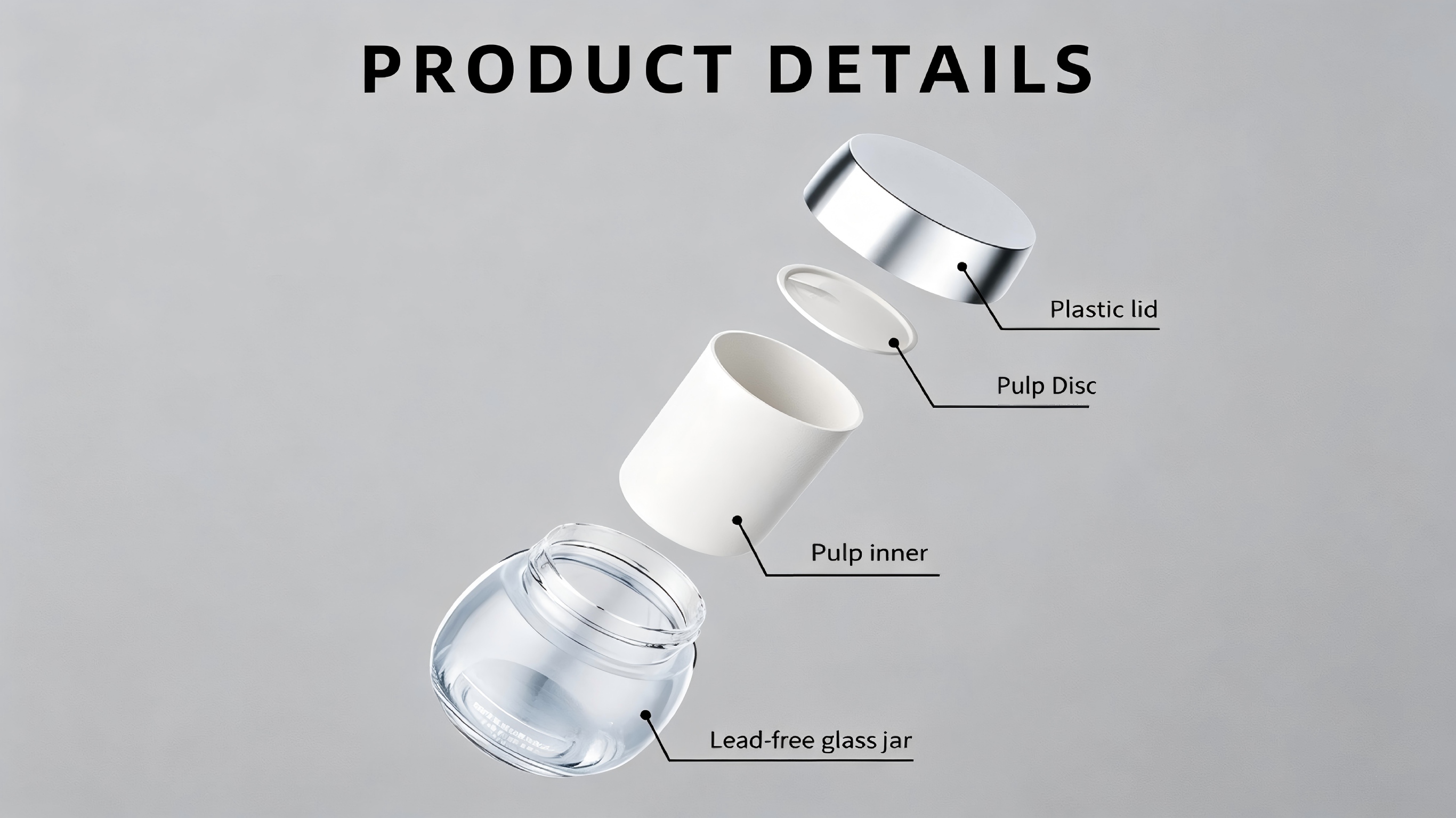
2The refill unit.This is what you ship. For creams it might be a molded pulp cup pre-filled at your fill line. For serums it is often a dropper-compatible refill pouch or a replacement glass vial. For cleansers it is typically a stand-up pouch or a lightweight refill bottle. The refill must protect the formula, preserve the active, and arrive intact.
-
3The molded fiber tray.This is the quiet hero. A custom molded fiber tray for skincare products cradles the refill, separates it from the vessel if both ship together, and presents the product like a jewelry case on opening. It replaces the plastic insert tray that most "eco" cartons still hide inside.
-
4The ritual and the messaging.The best engineered system fails if the customer doesn't know what to do. Clear instructions, a QR code to a refill video, and a reason to come back (subscription credit, loyalty points) turn a one-time buyer into a refill subscriber.
When these four parts align, refillable skincare packaging stops being a gimmick and becomes a retention engine.
Choosing the Right Refill Format by Product Type
Not every formula wants the same refill. Match the format to the product.
Creams and moisturizers
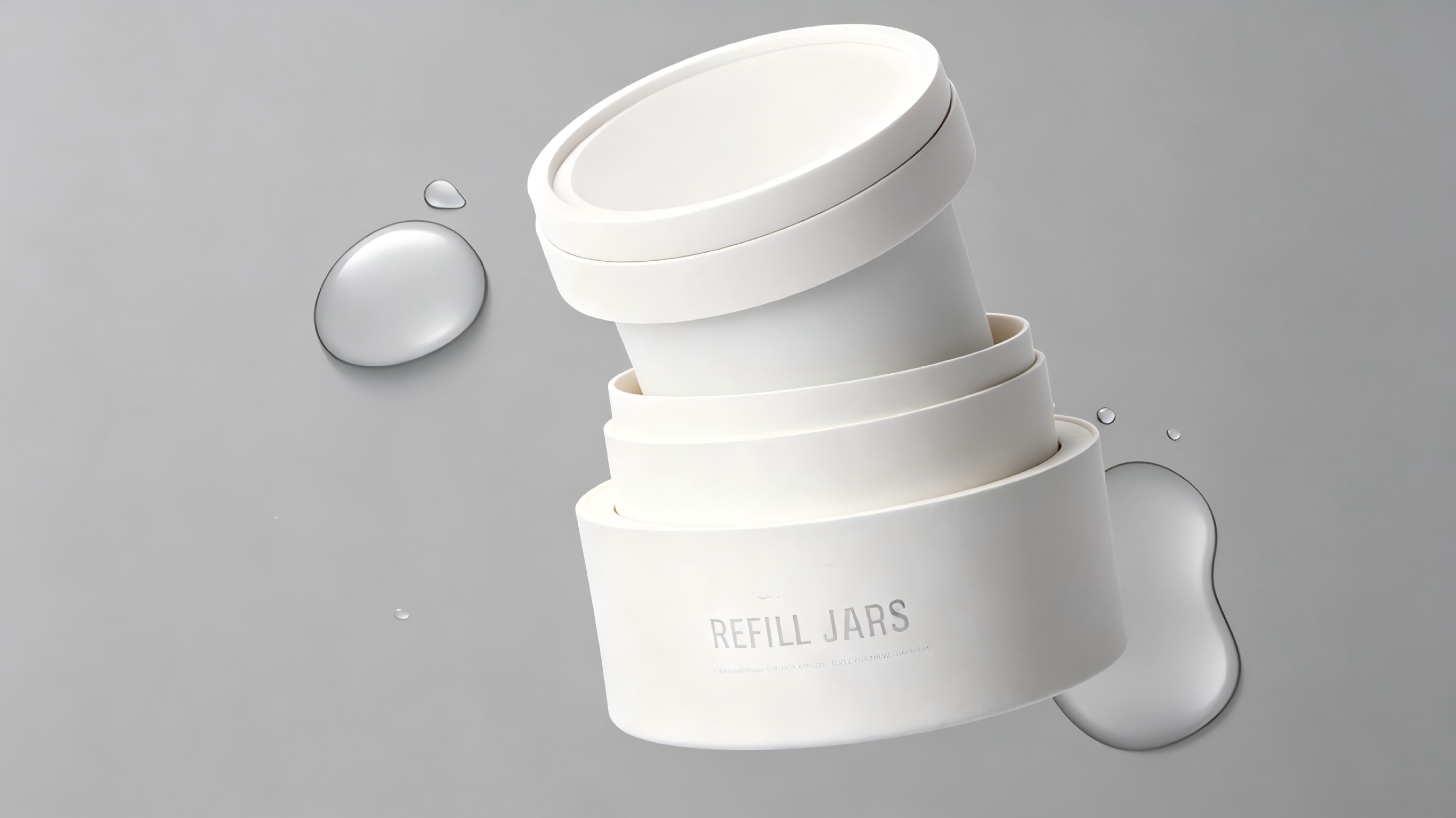
Wide-mouth jars are the easiest refill story. The customer keeps the jar; you ship a refill puck or a pre-filled pulp cup that drops in. The pulp cup doubles as the dose form and the protective insert, so there is no secondary plastic at all. This is the format most suited to a custom molded fiber tray for skincare products, because the tray positions the cup precisely and absorbs shock in the mailer.
Serums and treatment drops
Refillable serum packaging is trickier because droppers and actives demand precision. The two proven approaches are a replacement glass vial that clicks into the original dropper collar, and a foil catheter pouch the customer empties into the kept bottle. Both keep the high-touch dropper assembly in the customer's hands while the formula travels in minimal material. Brands with vitamin C or retinol should validate oxygen and light exposure during the refill's transit window.
Cleansers and toners
Cleansers move in volume, so freight weight matters most here. A stand-up spouted pouch or a slim refill bottle cuts plastic by 60–80% versus the original rigid bottle. The kept pump or disc-top cap stays with the customer. For toners, a pour-spout pouch refilled into the original glass is the cleanest loop.
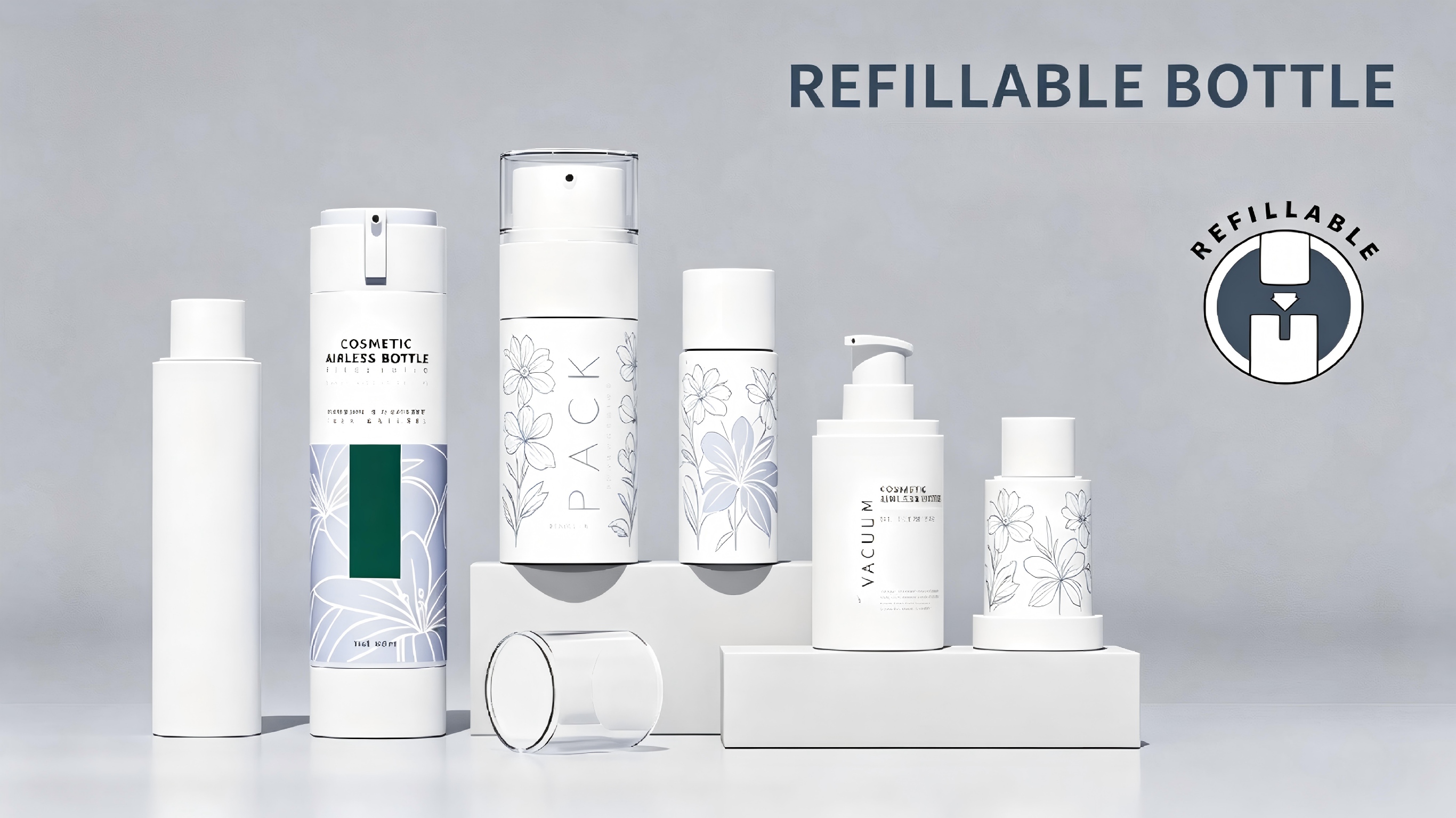
Building a serum or cleanser refill and not sure which architecture fits? [Start your refillable skincare packaging project](/get-a-quote/) with our engineering team and we'll prototype the right format for your viscosity and actives.
Molded Fiber Trays: The Quiet Workhorse
Most brands obsess over the outer vessel and forget the tray. That's a mistake. The tray is where sustainable skincare packaging either looks premium or looks cheap.
A molded pulp tray is formed from recycled paper fiber pressed into a cavity that matches your refill's exact shape. It locks the product in place, prevents rattle, and presents the unboxing like a watch box. Because it is a single material — fiber — it composts where local infrastructure allows and recycles in the paper stream where pulp cups do. No glued plastic window. No foam.
The [Biodegradable Products Institute (BPI)certifies compostability for fiber products against recognized standards, which gives your sustainability claims a third-party anchor instead of a self-issued label. For fiber sourcing, the (FSC)confirms the pulp comes from responsibly managed forests or verified recycled content — a line item many retailers now require on the spec sheet.
For skincare specifically, the tray does double duty. It protects a fragile refill in a mailer, and it elevates a gift set from "box of product" to "curated ritual." That matters for the premium and gifting segments where unboxing drives repeat purchase and social sharing.
If you're weighing molded fiber against plastic or vacuum-formed PET inserts, the trade-off is clear: fiber costs slightly more per unit but removes a non-recyclable component and strengthens the brand story. For a deeper look at the container side, see our page on the [molded pulp refillable container]and the published [molded pulp trays] product line, and our [refillable makeup compact] page covers clamshell and pan inserts for color lines.
Materials, Compliance, and "PFAS-Free by Design"
Skincare sits close to skin, so material safety is non-negotiable. Two questions come up on every spec call.
Is the fiber safe for contact with skincare? Yes, when specified correctly. Food-contact-grade pulp and compliant coatings are available, and the US [FDA]framework for food-contact substances is the reference many brands and contract manufacturers use when qualifying packaging that touches a formula or its refill. We recommend food-contact-grade fiber for any tray or cup that meets the product directly, and we document the material spec so your QA team can file it.
What about PFAS? This is the question every procurement lead now asks, and the answer has to be verifiable, not a slogan. Esen builds every skincare refill component PFAS-free by design — no intentionally added PFAS, verified by batch testing. We do not make absolute "zero" claims we cannot prove in a lab; instead, we hold the line at the design stage and confirm it with testing on production batches. That distinction matters, because retailers and regulators are starting to scrutinize vague "forever chemical" promises the same way they scrutinize recycled-content claims.
Beyond PFAS, the compliance picture includes recyclability labeling, recycled-content disclosure, and ESG-ready documentation. We package the certs (FSC chain-of-custody, compostability where applicable, batch test summaries) so your team can answer a buyer's audit in an afternoon instead of a quarter.
A Mini Story: Three Brands That Made the Switch
Real launches teach more than theory. Here are three representative skincare refill projects we've structured with brands at different stages.
Danielle's serum startup. The founder from our opening story piloted a dropper-compatible glass vial refill for her best-selling 30 ml serum, shipped inside a custom molded fiber tray. The result: packaging weight per shipment dropped 62%, and her "clean beauty" claim finally matched the unboxing. Refill subscribers now make up roughly a third of her repeat revenue.
Northwind Botanicals, a mid-size cream brand. They launched a refillable night cream in a kept glass jar with a pre-filled pulp cup refill. In the first quarter, 38% of customers opted into the refill subscription, and outbound rigid plastic fell by about 70% versus the prior single-jar model. The molded fiber tray became their most-photographed packaging element.
Lumière Atelier, a premium gift house. For a holiday set, they used a custom molded fiber tray for skincare products to present a mini cream, a serum vial, and a cleanser pouch in one carton. The unboxing was shared widely, and gifting repeat rate rose about 22% year over year. The tray did the premium work that a printed sleeve never could.
The pattern is consistent: the refill reduces waste and cost, and the tray makes the system feel worth keeping.
Cost, MOQ, and a Practical Launch Playbook
Refillable skincare packaging sounds expensive until you scope it as a system, not a single SKU.
Tooling. The molded fiber tray needs a tool — typically a CNC or formed aluminum mold sized to your refill. Tooling is a one-time cost amortized across the program. The vessel (if you're sourcing it too) may need its own tooling or can use an existing stock format.
MOQ. Emerging brands often worry about minimums. We run low MOQ programs specifically so a 5,000-unit brand can validate a refill before committing to six figures. Tray MOQs scale with tool size; vessel MOQs depend on the material.
Freight math. This is where refills pay back. A 250 ml cleanser refill pouch weighs a fraction of the rigid bottle it replaces. Multiply that by monthly DTC volume and the corrugate and postage savings frequently offset the tray premium within two to three quarters.
Launch sequence. Start with one hero SKU. Prove the refill ritual with a small batch and real customers. Capture the unboxing photos. Then expand the tray and refill architecture across your top five SKUs. This staged path limits risk and gives you case data for the rest of the catalog.
Want the numbers on your line? [Request a custom quote](/get-a-quote/) and we'll scope tooling, MOQ, and per-unit refill cost for your specific formulas and volumes.
How Esen Builds Refillable Skincare Packaging
Esen is a molded pulp and paper packaging turkey solution supplier, serving US skincare and cosmetic brands as an OEM and private-label partner. For refill systems, we handle the parts that are hardest to source separately: the custom molded fiber tray for skincare products, the pulp refill cup or insert, and the compliance documentation that ties it together.
Our process is straightforward. You share your vessel, formula, and target refill weight. We engineer the tray and refill unit, build the tool, and run batch testing for PFAS-free by design verification. You get FSC-sourced fiber options, compostability pathways where applicable, and a spec pack your QA and retail buyers can audit.
Because we sit inside the broader [cosmetic packaging]ecosystem, refillable skincare programs can share tooling logic and material specs with makeup and deodorant refill lines — useful if you plan to extend sustainability across your whole brand. Many brands start with skincare and scale the same tray and pulp language into other categories without re-qualifying materials, and our [sustainable cosmetic packaging] guide lays out the materials and certifications that make the case across the full cosmetic range.
FAQ
Are refillable skincare packages compliant with US cosmetic regulations?
Yes, when the materials are qualified for contact and the claims are substantiated. Skincare packaging in the US is governed under the FDA's cosmetic framework, and we recommend food-contact-grade pulp for any component that touches the formula or refill. We supply the material spec and batch documentation so your QA team can confirm compliance and answer retailer audits.
What product types work best with refillable skincare packaging?
Creams and moisturizers are the easiest start — wide-mouth jars take a drop-in pulp cup refill. Serums need a dropper-compatible vial or pouch refill. Cleansers and toners benefit most on freight, since a pouch or slim refill bottle cuts the most plastic and weight. Most brands begin with one hero cream or serum, then extend the system.
Is molded fiber safe and durable enough for skincare refills?
When specified as food-contact-grade pulp with a compliant coating, yes. The tray's job is protection and presentation, not containment of the formula long-term. It survives the mailer journey, holds the refill precisely, and composts or recycles in the paper stream. Durability is engineered into cavity depth, wall thickness, and fiber density per your product's weight.
How do molded pulp trays compare to plastic insert trays?
Plastic inserts (PET, PS, EPS foam) protect well but are rarely curbside recyclable and undercut an eco claim. Molded fiber trays protect comparably for most skincare weights, present more premium, and are a single compostable material. The unit cost is slightly higher, but brands recover it through stronger shelf story and removed non-recyclable components.
What is the typical MOQ for a custom molded fiber skincare tray?
MOQs scale with tool size and cavity count, but we run low-MOQ programs so emerging brands can validate a refill before scaling. A single-cavity tray for a hero serum or cream often starts in the low thousands of units. We'll quote exact MOQ alongside tooling cost once we see your refill dimensions and target volume.