




Sustainable Supplement & OTC Packaging Solutions
Supplements OTC packaging has an honesty problem: brands sell clean ingredients in a bottle that pollutes for centuries. esen closes that gap with compostable molded pulp — inserts and refill pouches — plus a durable keeper canister (metal, glass, or bioplastic); boxes are shipping cartons. They are PFAS-free by design. We sample them in 10 days at low MOQ from our Guangdong plant.
EU PPWR applies in full from 12 August 2026 — lock in compliant tooling now.
Why Supplements OTC Packaging Is Moving Off Plastic
The supplement aisle runs on HDPE bottles that persist for centuries, capped with a liner that defeats recycling, and lined with a desiccant that can't be separated. A "clean label" brand undercuts its own claim the moment the product ships in rigid plastic.
Three forces make this urgent:
the EU PPWR raises the bar for the whole bloc from August 2026, and several US states restrict intentionally added PFAS in food-adjacent packaging.
analyst coverage (MarketsandMarkets, Reports and Data) sizes the market at roughly $7.43B, heading toward $12.91B at about 5.7% CAGR. The plastic volume at stake is large and still rising.
the same shopper who reads the ingredient panel now reads the pack.
Molded pulp answers all three: it composts, it clears PFAS scrutiny, and it lets the outer pack match the "clean" promise inside.
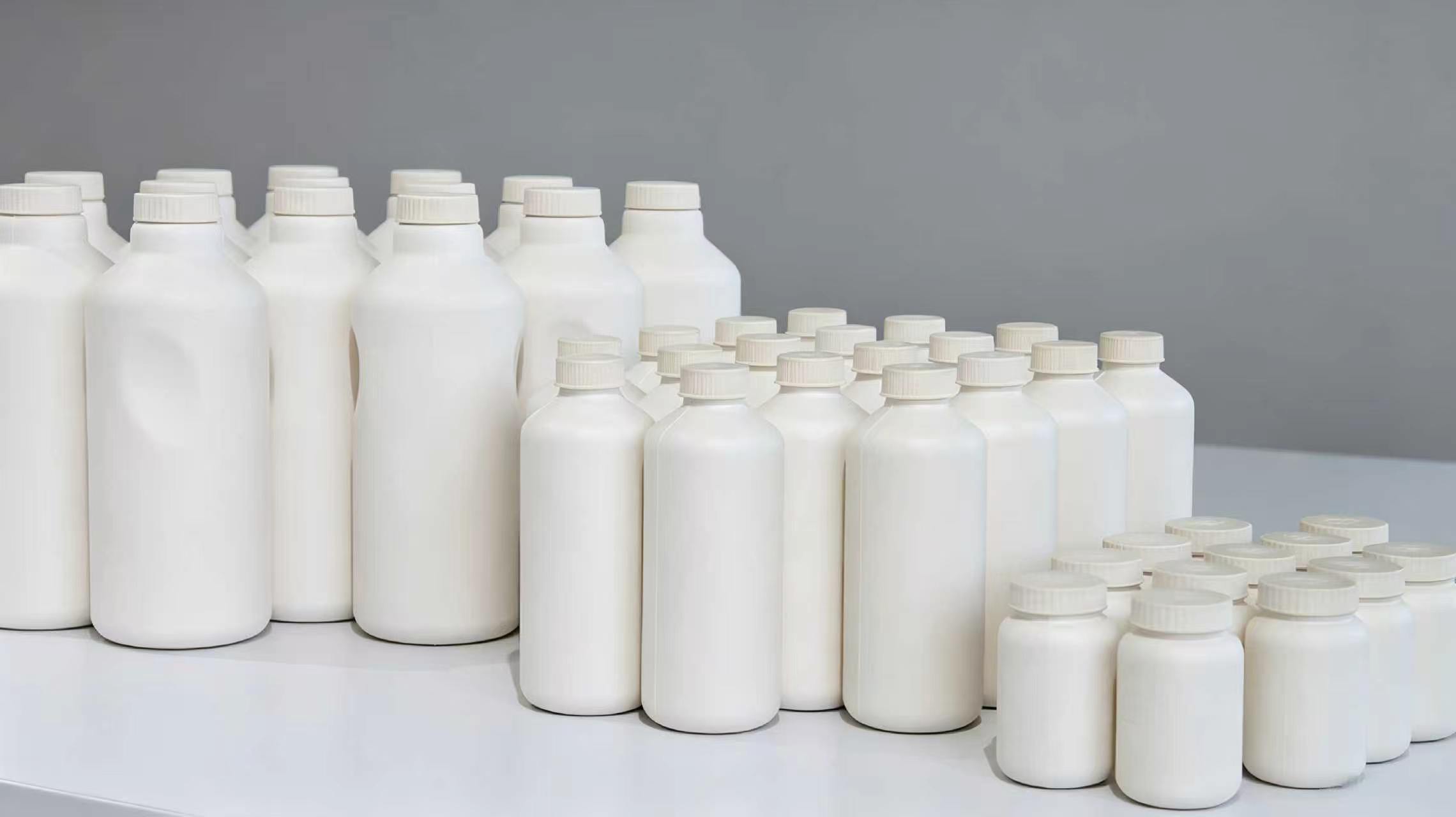
What the HDPE bottle actually costs your brand
The price on the bottle is the smallest part of the bill. Under extended producer responsibility (EPR) schemes rolling out across the EU and parts of the US, rigid plastic now carries per-unit fees. Those fees rise as recycling rates fall, and HDPE pill bottles are among the worst performers at the curb. A brand shipping a million bottles a year can watch the fees compound faster than the resin cost drops.
Then there is the PFAS problem. Many supplement bottles ship with grease-resistant liners that relied on per- and polyfluoroalkyl substances. As US states restrict intentionally added PFAS in food-adjacent packaging, those liners become a compliance liability. esen is PFAS-free by design — no intentionally added PFAS, verified by batch testing — so the liner question disappears before it reaches your QA team.
Molded pulp vs the HDPE bottle: the full comparison
When a buyer compares a pulp canister to the bottle they have run for years, the decision usually comes down to eight practical dimensions:
| Dimension | HDPE pill bottle | Molded pulp canister |
|---|---|---|
| End of life | Persists centuries in landfill | Composts in industrial facility |
| PFAS exposure | Common in liners | PFAS-free by design (no intentionally added PFAS, verified by batch testing) |
| Shelf presence | Familiar, low-differentiation | Tactile, premium, on-trend |
| Weight shipped | ~18–25 g per 200-count | ~14–20 g fiber, lighter flat-packed |
| Barrier | Built into wall | Liner, kept jar or refill pouch |
| Refill-ready | No | Yes — drop-in pouch or insert |
| EPR fees | Rising | Lower, compostable class |
| Brand story | "Plastic again" | Matches clean-label claim |
The table is not an argument to compost your margins. It is a map of where the rigid bottle quietly costs you. The costs show up in fees, in PFAS exposure, and in a pack that contradicts the label it protects.
Keeper Canister vs Boxes vs Pulp Inserts
Pick the format by what the product is and how it ships — see our molded pulp format map for the full range.
| Format | Best for | Job |
|---|---|---|
| Canister | Powders, tablets, bulk capsules | Rigid fiber body, refillable |
| Box | Bottles, sachets, kits | Folding carton with pulp insert |
| Insert | Inside an existing bottle | Holds dose, locks neck, divides |
How to choose your format in 30 seconds
Answer three questions and the format picks itself:
- Does the product already ship in a bottle you want to keep? If yes, start with an insert.
- Is the dose a powder, tablet or bulk capsule that needs a standalone home? That points to a canister.
- Is the pack a kit, sachet bundle or giftable multi? A folding pulp box with an insert does the job.
Most brands begin with the pulp insert cushioning (lowest risk, fits today's bottle) and graduate to a canister once the refill story is proven. A molded fiber vitamin box suits premium SKUs where the unboxing is the marketing — pair it with pulp cradle cushioning for fragile glass bottles.
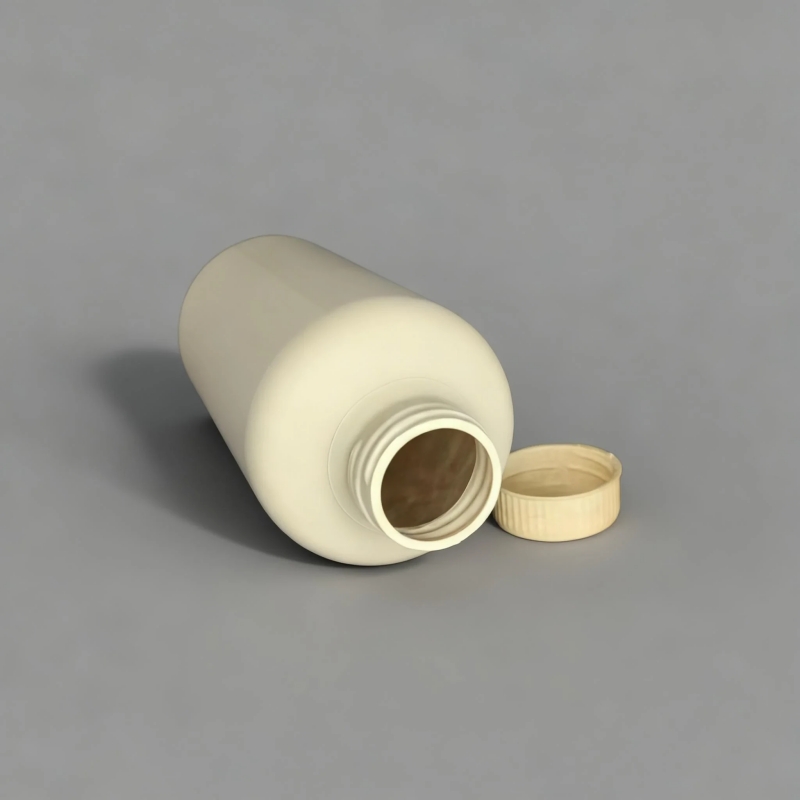
Sizing, wall thickness and tooling specs
The numbers matter once you move past the prototype. Typical dimensions for a 60–120 capsule canister run 60–75 mm in diameter and 90–130 mm tall, with a wall thickness of 1.2–2.0 mm wet-press fiber. Boxes fold from 350–500 gsm pulp board; inserts are tooled to the exact neck and shoulder of your kept bottle. Tooling is a single-cavity wet-press mold, sampled in 10 days. You validate the fit before committing to volume — no 20,000-unit bet on a shape you have never held.
Recyclable vitamin packaging usually starts as an insert inside a kept bottle, then moves to a durable keeper canister (metal/glass/bioplastic) as the brand de-plasticizes. The keeper replaces bottle, cap liner and desiccant tray; the pulp insert is the consumable refill. Our materials and fiber grades cover the bagasse and bamboo options behind every part.
Moisture Barrier, Freshness & Food-Safe Compliance
Capsules and powders are hygroscopic. The pulp part is not the moisture barrier — a liner, a kept jar, or a refill pouch is. The pulp's job is to present the dose, stop rattle, and keep product off the desiccant.
The barrier stack, layer by layer
A compostable supplement pack earns its freshness the same way a good bottle does — with a deliberate barrier stack, not a single magic material. The typical pulp build is:
Fiber body — presents the dose and carries the branding.
Functional liner — a compostable film or kept glass jar that holds the moisture barrier.
Desiccant — a sachet or integrated pad, now separable from the fiber for clean composting.
Closure — an induction-seal-compatible finish or a durable cap you keep across refills.
None of this asks the pulp to do what fiber cannot. It asks the pulp to do what fiber does best: stand, present and compost.
Keeping tamper-evidence without the plastic liner
Brands worry that dropping the bottle means dropping the tamper-evident seal. It does not. An induction-seal-compatible pulp finish lets you weld a foil membrane across the canister mouth, so the first open is obvious and the closure stays honest. The seal sits on the fiber, not on a plastic wall, and it clears the same retail scan the bottle did.
Recyclable & Refillable Vitamin Packaging
The strongest play drops the bottle for good. A customer keeps a durable jar or tin; you ship a pulp insert (the consumable refill) loaded with the next cycle in a refill pouch, or a fresh keeper canister. The fiber presents the dose, protects it in transit, and composts when the refill lands.
Designing a refill cadence that lifts reorders
The refill model only pays if the cadence is right. A 30-day supply ships in a pulp insert inside a kept jar; the 60-day or 90-day cycle ships as a flat refill pouch plus a fresh insert. The insert does the presentation work the rigid bottle used to own. The customer never feels a downgrade — they feel the upgrade. Brands that pair the refill with a subscription see the reorder rate climb because the fiber part shows up exactly when the dose runs low.
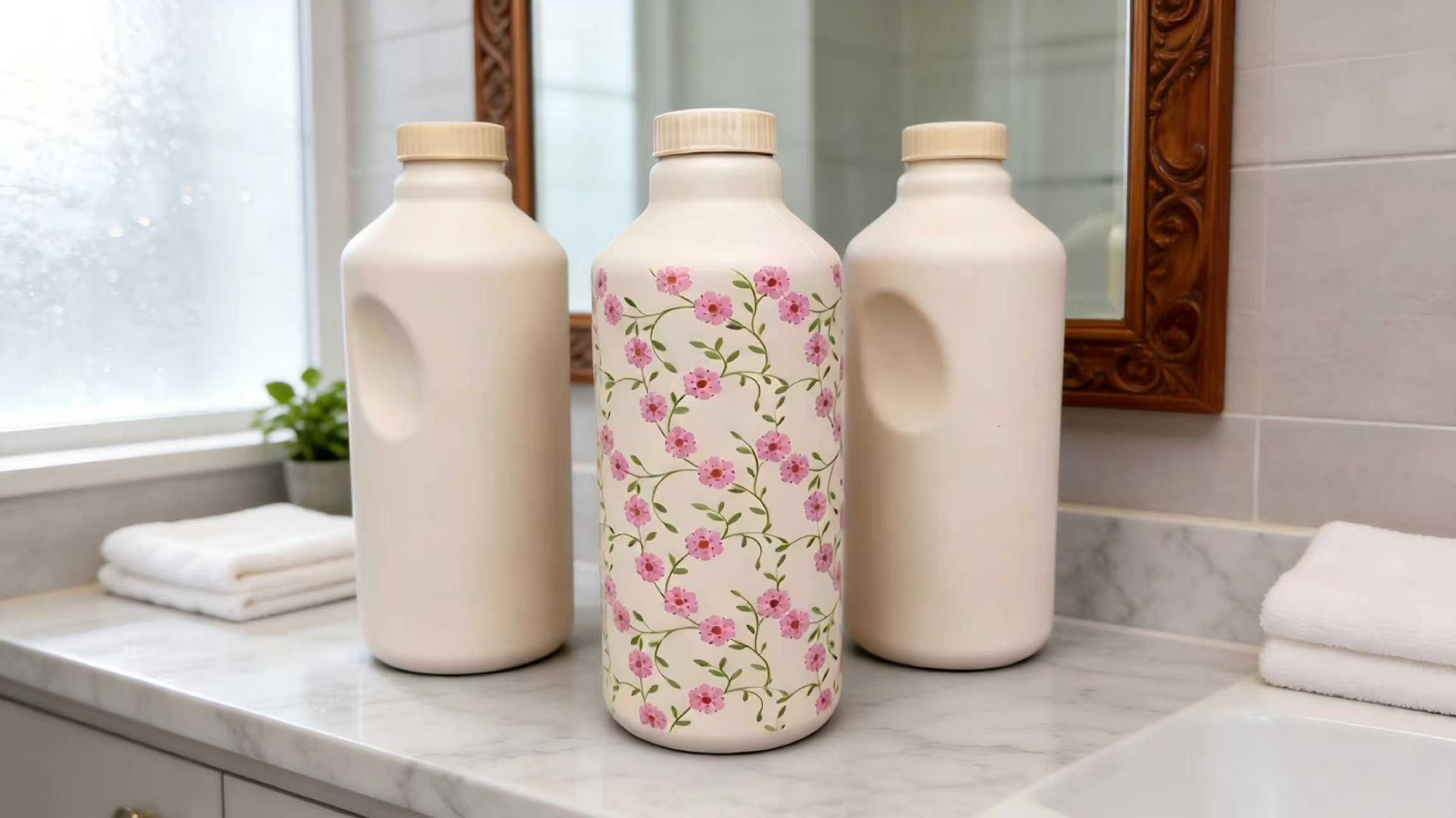
Custom Supplement Packaging in 10 Days
Most plastic tooling starts at 10k–20k units over 35–45 days. We sample a prototype canister or insert in about 10 days, then produce in the 30–40 day band once tooling is approved.
pilot compostable supplement packaging without a 20k-unit bet.
hold a physical prototype.
bagasse or bamboo, your call.
tool for canister, box or insert refill.
For the full capability overview, see custom molded pulp OEM manufacturing.
The 10-day sampling timeline, step by step
you send format, product type, target market and volume; we confirm fit.
we cut the single-cavity wet-press prototype mold.
we press, trim and line the sample in bagasse or bamboo.
the physical prototype ships to your dock for a hold-and-feel review.
From there, tooling approval unlocks the 30–40 day production band. You never wait 45 days just to see a shape.
Your pre-brief spec checklist
Before you message us, lock these five inputs so the sample is right the first time:
- Product form — powder, tablet, capsule count and fill weight
- Kept container — bottle neck dimensions if you plan an insert
- Barrier need — desiccant level and target shelf life
- Market — US / UK / DE / FR / AU, for certification and labeling
- Volume and cadence — pilot run size and refill frequency
Hand us that list and the 10-day sample reflects your real SKU, not a generic guess.
- A plastic pill bottle outlives its contents by centuries and fails the "clean label" promise; pulp canisters, boxes and inserts compost, clear PFAS scrutiny, and match the brand's ingredient claim.
- The pulp part is not the moisture barrier — a liner, kept jar or refill pouch is — but it presents the dose, stops rattle, and is FDA food-safe and PFAS-free by design, batch-tested.
- Refill-ready pulp lets a brand retire the rigid bottle for a kept jar plus a refill pouch, proven in beauty and now scaling to vitamins.
FAQ
Start with a pulp insert inside a kept bottle, then move to a durable keeper canister as you de-plasticize. The keeper replaces bottle, cap liner and desiccant tray; the pulp insert is the consumable refill and is FSC/BPI certified.
Yes where it contacts product — we run FDA food-contact screening and hold a PFAS-free by design position (no intentionally added PFAS, verified by batch testing). The pulp is not the moisture barrier; the liner or pouch is.
In most formats, yes — a pulp canister or box with a pulp insert presents the dose, locks the neck, and composts, versus HDPE that persists for centuries.
About 10 days for a prototype, with mass production in the 30–40 day window after approval.
Lower than plastic incumbents — far below the 10k–20k units a vacuum-formed supplement tray typically demands.
Yes. The desiccant sits as a separable sachet or integrated pad inside the fiber, so it does its job during shelf life and then lifts out cleanly before the pulp composts. The pulp presents the dose; the desiccant controls the climate.
A wet-press pulp canister is rigid enough to protect tablets and capsules in transit and to stop the rattle that used to need a plastic tray. For extra protection, pair it with a kept jar or a refill pouch — the fiber is the presentation, the kept container is the armor.
Increasingly yes. BPI certification is the credential US buyers and municipal compost programs recognize, and the FSC chain-of-custody answers fiber-sourcing questions at category review. A pulp canister clears the same retail gate as a plastic bottle on the questions that matter.
Start with a pulp insert that matches your current bottle neck, then graduate to a standalone pulp canister or molded fiber vitamin box as your refill story proves out. The insert is the lowest-risk first step and keeps today's bottle in service.
Request a Quote
Tell us your format (canister / box / insert), product type, target market and volume. We return a spec sheet, a 10-day prototype, and a quote.
Esen — compostable supplement packaging: molded pulp canisters, boxes & inserts in bagasse and bamboo. PFAS-free by design,refill-ready, low MOQ, 10-day sampling.